The Government of Grenada has officially signed a major financing agreement with the World Bank to fund the Caribbean Resilient Renewable Energy Infrastructure Investment Facility (RREIIF), securing USD 35.41 million to strengthen the island’s renewable energy infrastructure and enhance its climate resilience.
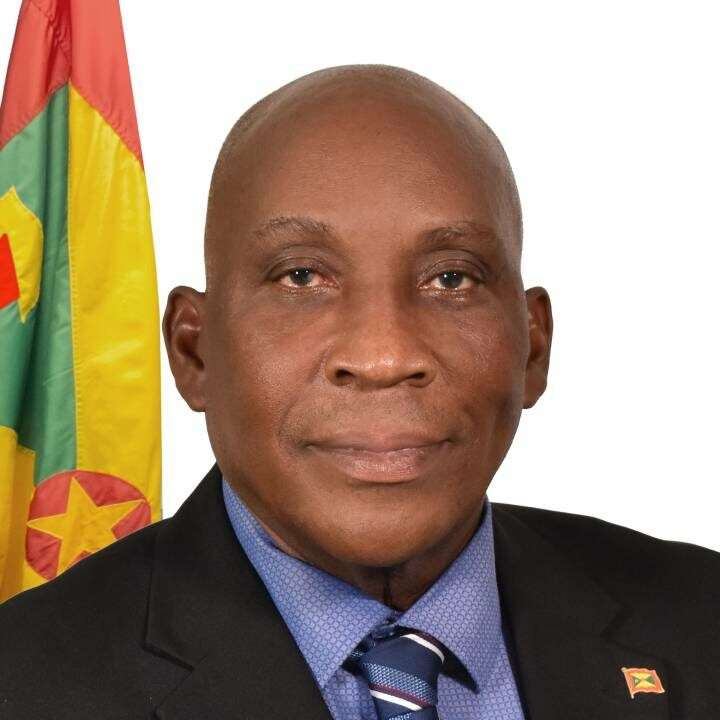
The signing was undertaken by Hon. Dennis Cornwall, Minister for Finance, on behalf of the Government of Grenada. The initiative was spearheaded by Hon. Kerryne James, Minister for Climate Resilience, the Environment and Renewable Energy, demonstrating the Government’s strong commitment to building a sustainable and energy-secure future for the country.
Grenada’s participation in the RREIIF marks a significant milestone in its energy transition
journey. The financing package includes:
• USD 10 million in IDA credit for equity capital in the Risk Mitigation Mechanism;
• USD 21.75 million for Renewable Energy Integration and Infrastructure
Modernisation, comprising USD 15.75 million in IDA credit and USD 6 million from the
Clean Technology Fund;
• USD 3 million in IDA credit to strengthen the capacity of Grenada’s Project
Implementation Units (PIUs).
All IDA financing is provided on Small Economy Terms, recognising the specific needs and vulnerabilities of small island states like Grenada.
As one of the core partners in the RREIIF, Grenada is expected to:
• Add 19.1 MW of new renewable energy capacity to its national grid;
• Support the generation of 134 GWh of clean energy annually, helping to avoid over
109,000 metric tons of CO2 emissions per year;
• Mobilise USD 120 million in private capital for renewable energy investments;
• Upgrade 80 km of transmission and distribution lines and install 20 MW of battery
storage capacity;
• Create 40 direct jobs, with a commitment that at least 20 will be filled by women.
The RREIIF, which totals USD 115.2 million regionally, is a pioneering facility developed through collaboration between the World Bank, the Eastern Caribbean Central Bank (ECCB), and ECCU member states. It addresses shared regional challenges such as high investment risks, limited capacity, and small project sizes.
While project coordination is regional, implementation is country-led, ensuring alignment with national priorities and institutional strengthening.
The facility’s key components include:
• Regional coordination and technical assistance through the Regional Renewable
Energy Unit (RREU);
• A Risk Mitigation Facility that leverages tools like partial credit guarantees;
• National-level grid modernization and renewable energy integration infrastructure;
• A Contingent Emergency Response Component (CERC) to restore energy services
post-disaster.
The RREIIF received approval from the World Bank Board on April 17, 2025, following extensive consultation and technical appraisals. Implementation in Grenada will now progress through project effectiveness steps, including staffing and capacity development at both national and regional levels.
Minister James emphasized the importance of this achievement by saying,
“This initiative is not only about energy, it’s about resilience, jobs, and long-term sustainability. We are building the systems today that will power and protect Grenada tomorrow.”
Minister Cornwall further added, “This financing package reflects our government’s prudent approach to development leveraging concessional financing for long-term investments that deliver measurable economic and environmental returns.”
Grenada’s leadership in the RREIIF highlights its role as a regional frontrunner in the clean energy transition and positions the country to benefit from future similar initiatives.