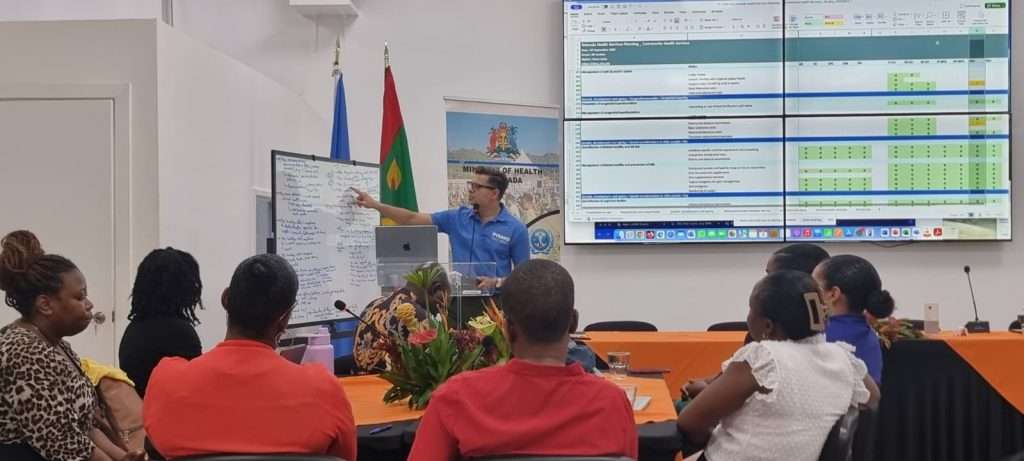
In a major step toward strengthening national healthcare delivery; senior managers, planners, doctors, nurses, and administrators from Grenada’s Ministry of Health joined experts from the Pan American Health Organisation (PAHO) recently, for a high-level consultation focused on service mapping and gap identification.
The week-long exercise which was held in Grenada, brought together technical expertise to assess the distribution of health services and identify areas of critical need. The initiative is part of a broader push to ensure that healthcare resources are allocated equitably and efficiently across the country.
Dr. Vishwanath Andy Partapsingh, Health Systems and Services Advisor at the PAHO/WHO Office for Barbados, described the consultation as “a transformative step toward data-driven decision-making and equitable access.”
He emphasised that effective healthcare is not solely about infrastructure and personnel, but also hinges on precision planning and strategic investment. The PAHO/WHO expert highlighted that the collective input has helped better align services to meet the needs of all, while also addressing issues such as waste reduction and improved management— especially important in environments with limited resources. “There is now a clearer roadmap that the Ministry can use to enhance service delivery and successfully guide implementation plans,” he noted.
Grenada’s Chief Medical Officer (CMO), Dr. Shawn Charles believes the outcomes of the exercise will inform national health priorities and guide future investments in wellness, prevention, and primary health care services outreach.
Dr. Charles said it is now up to the Ministry to leverage the data. “Now that we have completed that thorough process, we have the opportunity to use the data strategically to drive smarter decisions, improve our performance and delivery of care and gain a
competitive edge. It’s not just about collecting data – it’s about transforming it into actionable insights that fuel growth, innovation, and impact”.
The CMO said the five-day exercise provided the ministry with a clearer picture that can help manage existing services effectively.
Health authorities believe that it has compelled technical expertise and frontline insights to chart a more responsive and resilient health system. From service distribution to resource optimisation, the discussions emphasised that effective care is not just about infrastructure, but about precision, inclusion, and strategic planning. Participants are optimistic that the outcome of the consultation will inform national health priorities and guide future programming.